6 minutes
Batsquad Assemble - VRising as a PvE group experience
Hypothetical: You wake up at 21:30 like you do every evening, ready to rise up magnificently out of your coffin, maybe snack on some groveling servants, and instead this crew of apex predators ambushes you. They say they’re going to end your reign of terror just so they can place copies of your throne in jank-ass, clipping locations around their castles. What do you do?
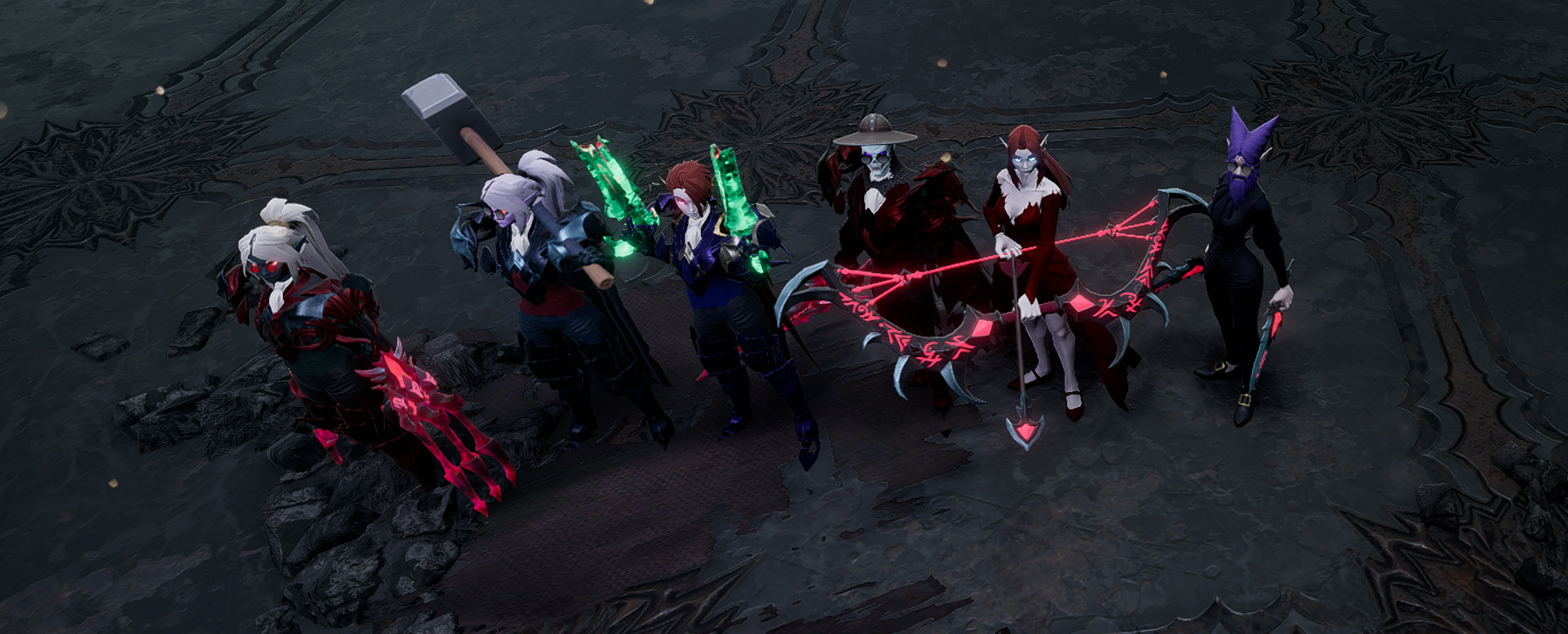
I played through V Rising with our group of friends recently, and we rocked up on Dracula after ~30 hours or so, representing peak vampiric performance with our ball gowns, red aviators, and conical purple hair hairdos. Most of us had previously dabbled with the game, in PvP servers briefly when the game first released in early access, and then again later on in PvE mode when offline play was made possible. My partner and I even played through most of the game ourselves as a duo, but it never quite managed to retain us all the way through to the final showdown with our gothic great-great-great-grand-daddy. The fact that this playthrough ended with us all getting our own personal copies of Dracula’s fancy chair got me thinking about how we engaged with the game differently to previous attempts - the game had not significantly changed, so what had changed with us, or the way that we engaged with the game’s content?
A contextual shift in the gaming industry landscape
V Rising released at a time where I feel it’s fair to say the gaming industry was still going through perhaps the tail-end of peak battle royale frenzy. Much of the initial material advertised an experience similar to Rust or Fortnite where PvP was an integral aspect of the game’s experience. A unique gothic fantasy hook, laid on top of weighty, meaningful combat gameplay mixed with resource collection and base building. All the key components of a viral hit for the time, and it’s no wonder that it far surpassed Stunlock Studios’ previous effort of “Battlerite Royale” - a legally distinct melding of Fortnite and League of Legends with ARPG elements. I remember playing VRising at the time of release with some friends, and while the PvP aspect was definitely enjoyable, the amount of time investment required to amass any reasonable amount of materials and progress in the tech tree felt prohibitively long, and ended up being the main reason (at least consciously) that I bounced off until much later when private PvE was better supported.
Playing now, however, it might be a bit idealistic but I do feel like there’s a shift in the gaming industry towards acknowledging that games are something that should respect the time players are choosing to invest into them. As the world seems to speed up at break neck speed around us, having the option to engage with content at our own pace and at an adjustable level of risk is a welcome relief. Judging by the game’s continuing quiet but steady success, this is a sentiment that seems to be valued by a growing portion of the gaming market, and V Rising has made substantial changes over the years to lean in to the PvE centric style of play.
A role for everyone
Another difference that allowed V Rising to properly sink its teeth into me this time around is primarily the product of those same PvE centric changes. There is enough depth to the tech and combat systems that even with a group of 6 people there was always something for us to specialise in. Whether it was exploring to find the next boss, getting pummeled by angry bears while collecting resources, or figuring out how to optimise the Feng Shui of the castle to get the best production efficiency bonuses, it never felt like we had to be doing something we didn’t want to. This was a very different experience to playing with just 2 players as I had tried previously, where many tasks ended up feeling more like chores from pure repetition over the course of the game’s not-insignificant progression. This would have also been partially due to massively reducing crafting time and resource requirements using the private server tooling options. Something that allowed us to engage with the game in a way the reinforced our emergent fun, where others might enjoy a higher level of designer “pushback” on their progression.
Play your way^tm
The final but perhaps most interesting part of my re-experience of V Rising cam while I was sitting in the castle about 25 hours in, as we were wrapping up towards the endgame of the explicit progression. I was agonizing over what colour to use for the candelabras behind the group’s set of coffins, and shuffling paintings back and forth between walls, when the call came out that it was time to kill the next boss. I realised then that the most powerful reason V Rising had managed to keep me engaged throughout the entire playtime was the remarkable lack of friction in the transition between free and instrumental play1. As I jumped down to the ground floor and used the teleporter to instantly travel to the temporary base location another player had set up near the boss they had found, the transition from making no concrete progress whatsoever to suddenly engaging in goal-centric activity with the rest of the group was almost imperceptible. No fiddling with inventories, all equipment is always equipped with no weight limits, and base materials are all able to be stored in cheaply constructed chests to pull from anywhere in the castle. No need to awkwardly change loadouts or skills, and no endless running to catch up with the players that enjoyed scouting out in the wilderness. It’s a refreshing simplicity that seems to be often missing from modern takes on the base building/resource collection genre, where your inventory is often cluttered with building materials, or your armour and equipment requires repairs before venturing out.
A stake through the heart
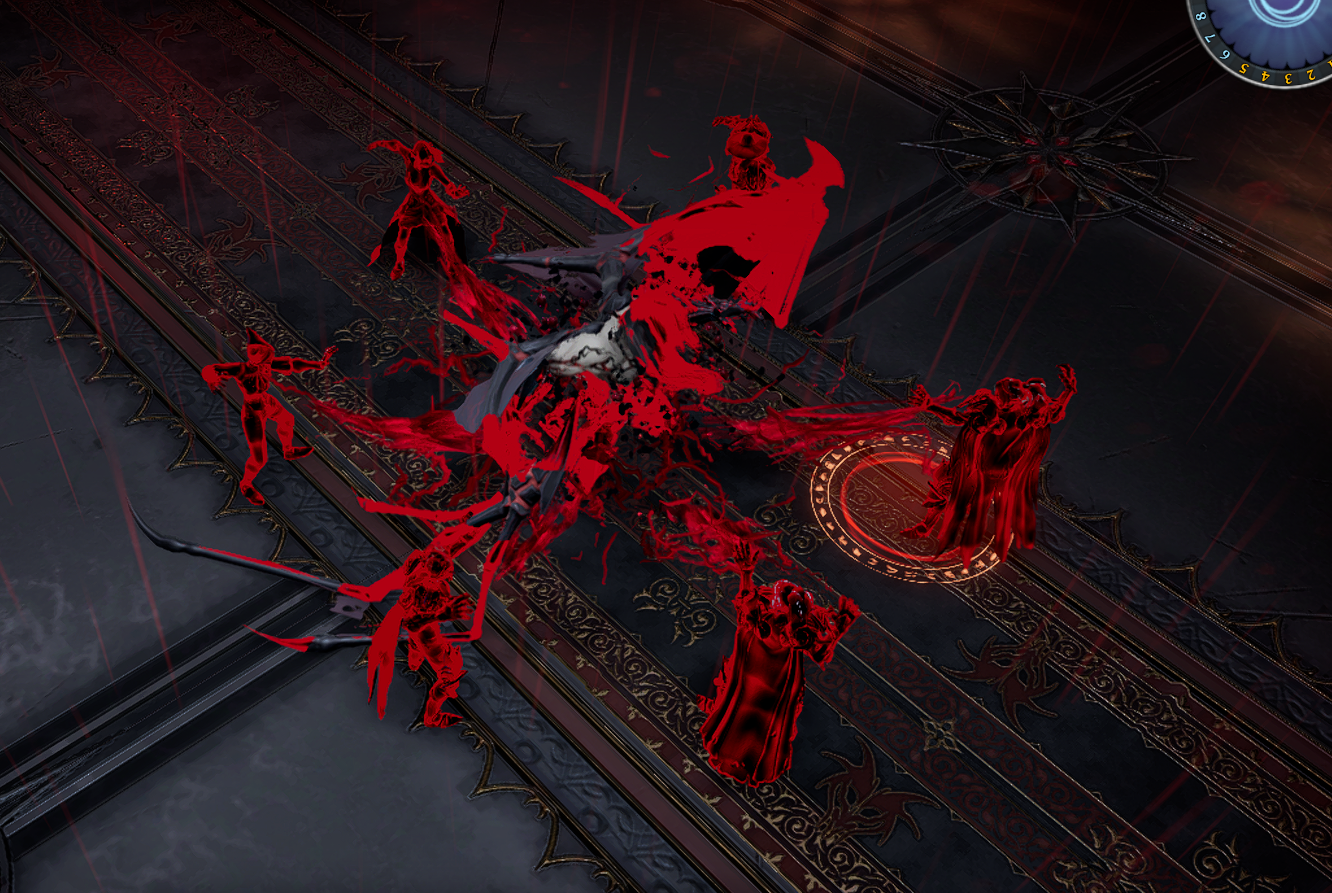
In the end, V Rising surprised me by suddenly being over before I realised it, which is high praise for the genre. There were only a couple moments where the progression dragged (such as at the very end where crafting jewels became prohibitively expensive even at minimal cost multipliers), and most of these were easily circumvented with the power of friendship - 6 bodies collecting resources makes for light work. And nothing quite beats the feeling of gathering around a nice campfire subdued grand-vampire for warmth with friends.
-
Instrumental and free play here referring to the definitions commonly understood in game studies specifically ↩︎